
+385 (0)23 253 090 | info@4clinic.hr | Price list


Medical Safety First. Aesthetic Precision Always.
Moles (nevi) are usually benign skin lesions, but they can raise medical, aesthetic, or functional concerns. They may appear on the face, neck, trunk, or scalp—some present from birth, others developing later in life. Moles vary in shape, colour, and texture: flat or raised, light or dark, with or without hair. However, any mole that begins to change—in size, colour, shape, or sensation—should be professionally evaluated and, in many cases, removed.
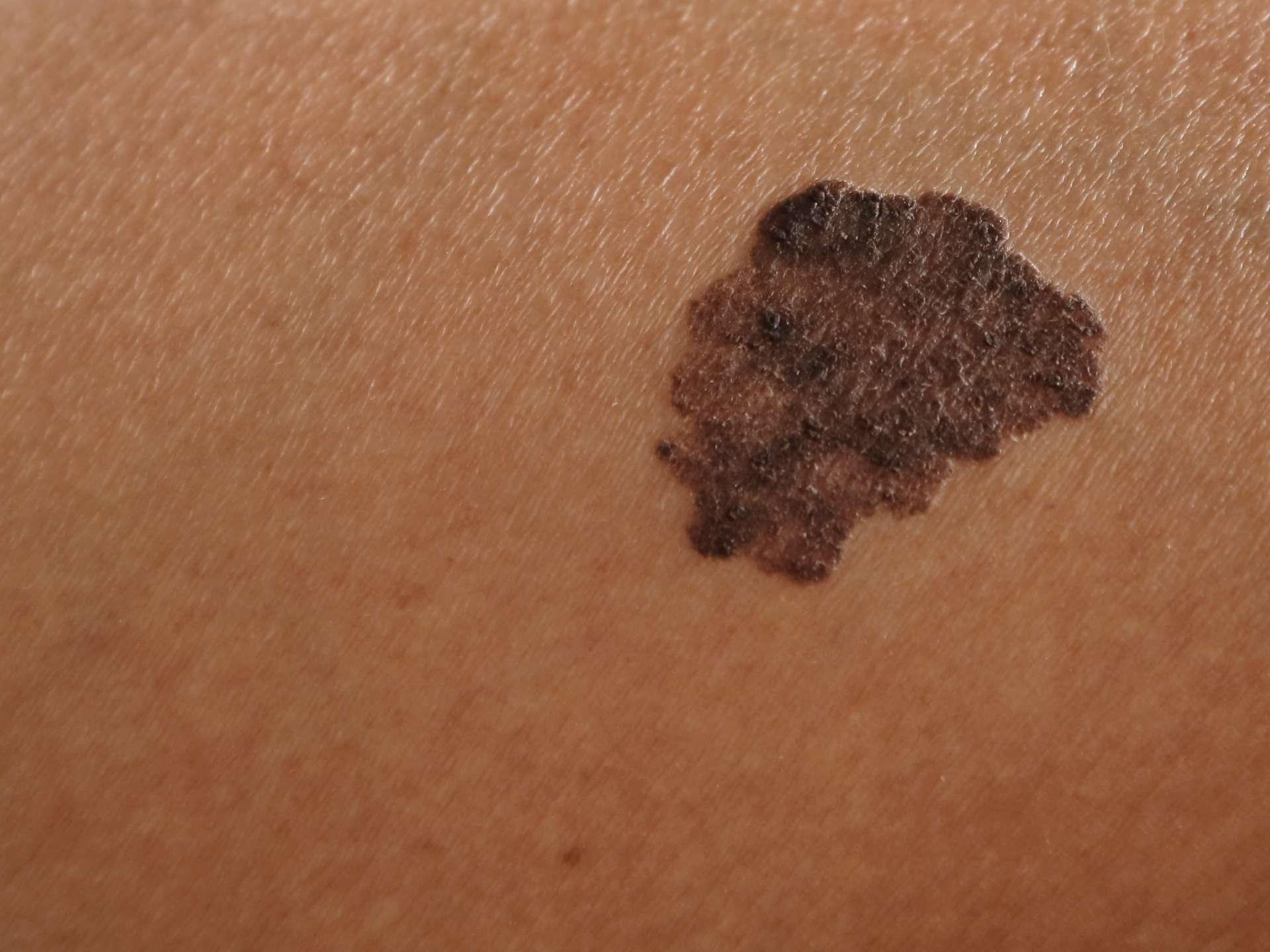
Dangerous moles are those with a high risk of developing into melanoma (a malignant skin tumor). These include moles that change in colour, shape, or size. Particular attention should be paid to moles that grow irregularly, bleed, or itch, as described by the ABCDE rule, and it is also recommended to remove moles that differ in appearance from others on the body (the “ugly duckling” sign). While a clinical skin examination can identify moles that should be removed, only pathohistological analysis (PHA) can provide a definitive diagnosis as to whether a mole is benign or malignant.
Malignant moles occur when melanocytes begin to multiply uncontrollably. The most serious form is melanoma, one of the most aggressive skin cancers due to its ability to spread early. Malignant moles may resemble ordinary ones but typically show:
Early detection and complete removal are critical.
At 4CLINIC, all moles are removed surgically—by design, not by habit. Surgical excision is the only method that:
Laser removal destroys tissue with heat, leaving no sample for analysis—and therefore no diagnostic certainty. For moles, certainty matters.
Even when removal is requested for purely aesthetic reasons, we still use surgical excision, combined with refined aesthetic technique. For the face, neck, or décolletage:
The result: a removed lesion, diagnostic certainty, and a scar that fades and becomes barely visible over time.

We do not guess. We confirm.
Pricing depends on:
Exact cost is determined after examination.
Mole removal is not a cosmetic shortcut—it is a medical procedure that requires expertise and responsibility.
If you have a mole that concerns you, looks unusual, or you simply wish to remove it safely, BOOK a consultation today.
No assumptions. No shortcuts.
Only clear diagnosis and professional care.
When a mole shows signs of possible malignancy, causes irritation or bleeding, or poses an aesthetic or functional concern.
No. The procedure is performed under local anaesthesia. Mild tightness afterward is easily managed.
Yes—but typically a thin, discreet one that fades with time. Facial moles are removed using specialised aesthetic techniques.
Yes. Every surgically removed mole undergoes pathohistological analysis.
Healing usually takes 7–14 days, depending on size and location. Sutures are removed during follow-up.
No—if completely excised. This is why experience and proper technique are essential.


MON, WED: 1 PM – 7 PM
TUE, THU, FRI: 8 AM – 1 PM
SAT: by appointment